The Last Blade is a highly acclaimed 2D weapons-based fighting game series developed by SNK for the Neo Geo system, first debuting in arcades in 1997. Set during Japan’s late Edo/Bakumatsu era, it is widely considered one of the most visually and mechanically accomplished titles on the platform.
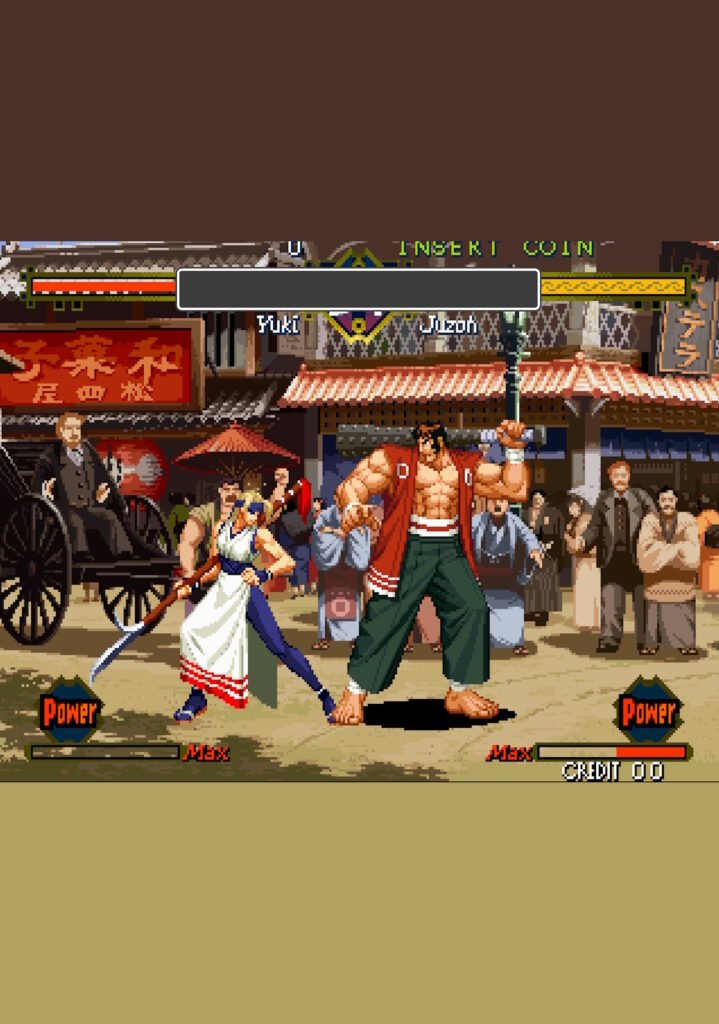
The story of The Last Blade (Bakumatsu Rōman) is a supernatural epic set in 1863, during the final years of the Tokugawa Shogunate (the Bakumatsu era). It blends historical Japan with Chinese mythology, focusing on the guardians of Hell’s Gate, a portal between the living world and the land of the dead.
Part I: The Opening of Hell’s Gate
Long ago, the portal was sealed to protect humanity, with four warriors chosen as hosts for the Four Gods (Seiryu, Suzaku, Byakko, and Genbu) to guard it.
- The Catalyst: Shinnosuke Kagami (host of the Phoenix, Suzaku) grows disillusioned with humanity’s perceived weakness. He murders the master swordsman Gaisei and opens Hell’s Gate to “cleanse” the world.
- The Conflict: Gaisei’s three students—Kaede, Yuki, and Moriya Minakata—are torn apart. Moriya takes the blame for the master’s death to protect his siblings and disappears, leading Kaede to hunt him for revenge.
- The Resolution: Kaede eventually awakens his own divine power (the Blue Dragon, Seiryu) and learns the truth. He defeats Kagami, who is cast into the abyss, but the gate remains partially open
Part II: The Sealing Rite
Six months later, in The Last Blade 2, the barrier between worlds remains unstable, and spirits from the underworld plot to invade.
- The Sealing Maiden: A “Sealing Rite” is required to close the gate permanently. This ritual requires the power of the Four Gods and a “Sealing Maiden”.
- The Final Boss: The underworld resurrects Gaisei’s body as the demonic Kouryu, who seeks to prevent the ritual.
- The Sacrifice: In the series’ bittersweet ending, it is revealed that Yuki is the Sealing Maiden. To save the human world, she must sacrifice her life to complete the rite.
Core Gameplay Mechanics
The series is often viewed as a spiritual successor to Samurai Shodown, but it introduced several distinct innovations:
- Power vs. Speed Styles: Upon selecting a character, players choose between two distinct fighting styles. Power mode focuses on heavy damage, chip damage on block, and access to devastating “Hidden Secret Slashes”. Speed mode enables intricate “dial-string” combos and rapid-fire chain attacks.
- Repel System (Hajiki): Players can use the D button to deflect or parry incoming attacks, leaving opponents momentarily stunned and vulnerable to a counter-attack.
- Super Cancels (Shōka): It was one of the first SNK fighters to allow players to cancel special moves into super moves, adding a layer of strategic depth to offensive play.